
Leggi questo post in:

For the first time in my life, I am on a diet.
When I was little, I was super thin, and as a young adult, I could eat anything and never gain weight. But not all of my pregnancy weight went away on its own, and I am now 8.5 kg (18 lbs) heavier than my ideal weight. Sure, it’s not the end of the world, but I don’t feel good and so I’ve decided to do something about it.
It’s not that I eat badly, but I do eat too much. I love eating. I love tasting flavors and combining ingredients. I don’t eat any meat and I love vegetables, and absolutely adore leafy greens.
We also get a lot of stinging nettle weeds where I live in southern Italy and my balcony garden gets totally overrun by it. I’d always considered it a huge inconvenience… until I realized that those weeds were like my own personal crop of free organic leafy greens.

Did you know that stinging nettle is super healthy, and tasty too? I wrote a couple of years ago about how to harvest and cook stinging nettle in soups and stews, and that’s still my favorite way to eat it, but I recently started wondering how I could get all the healthy goodness of nettle without having to cook it. And what I came up with was this: homemade nettle powder!
Your first instinct might be to turn up your nose at the idea of eating your weeds, but trust me, if you try nettle, you’ll start being happy to see weeds in your garden! Read on to learn how!
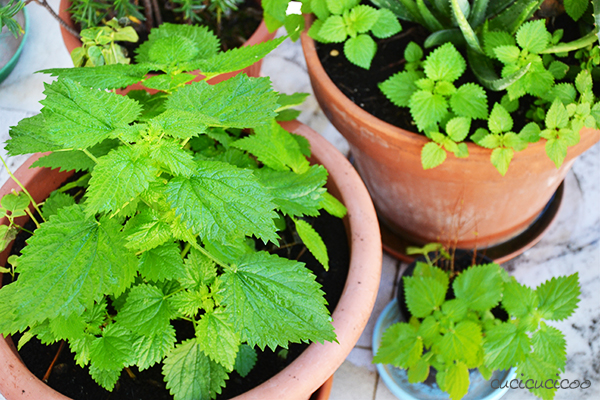
This is what stinging nettle looks like. It loves moist soil, so it grows like crazy during our rainy season, so much so that it frequently dwarfs the other plants in the pot. And as the name says, it stings if you rub against it, and the sting takes a little while to go away. You definitely don’t want to touch it with your bare hands, so I highly suggest you procure a pair of thick gardening gloves* before harvesting it.

If you’re removing this weed from your garden, grab a bunch near the base of the stems and pull it up.
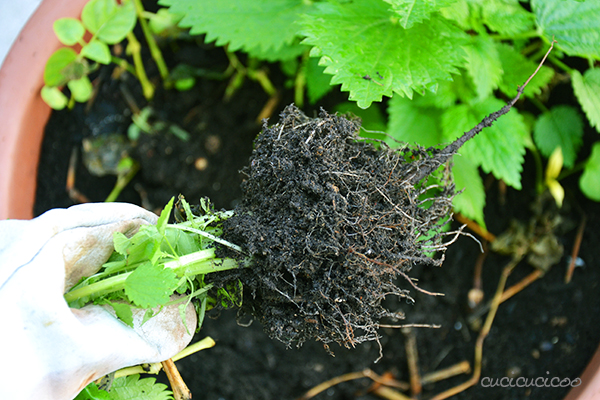
Try to pull out all the roots. If you’re harvesting nettle from a field, or something, you can just cut it without pulling it up.

Remove the larger leaves from the thick stems. The stems do not cook up or grind up as nicely as the leaves, so try to avoid using them.

When the nettle plants are smaller, though, the stems are more tender, so you can leave some of them.
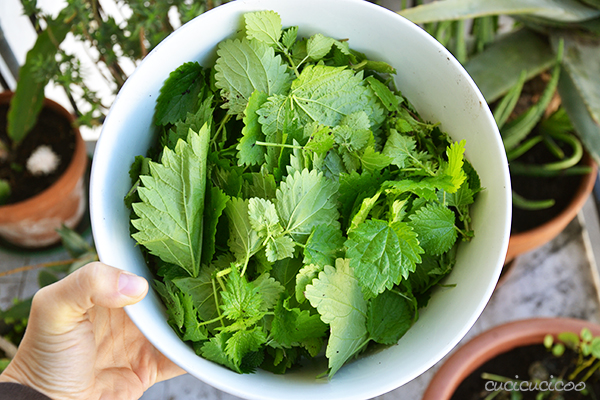
Put all the leaves in a container and rinse them. Try not to get too much soil mixed in with them. I switched to regular kitchen gloves* after getting them wet. I’m not 100% sure, but I think that once the leaves get wet, they don’t sting as much, but I honestly didn’t test out this theory of mine, so I suggest still wearing gloves at this point.

Dry off the leaves as much as you can with a salad spinner*, or simply by wrapping them up in a dish towel, and then spread them out on a dish towel to let them air dry.
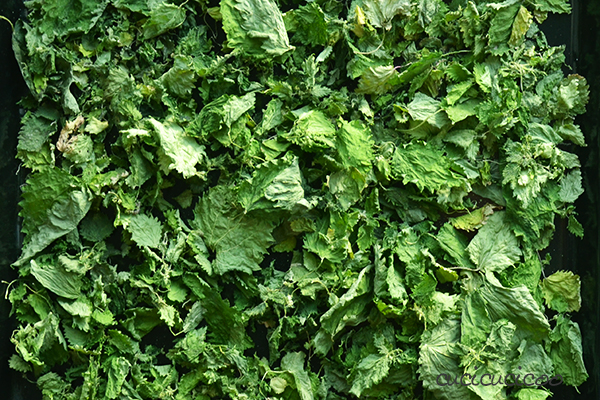
Once the water has dried away, put the leaves on a baking tray*. Place the tray in the sun if possible, or if not in a dry place where nobody will touch it. Move the leaves around every day or so to let the leaves on the bottom dry better. My leaves only took a few days to dry out completely.
If you have a dehydrator*, you could also just put the leaves in that.

After the leaves have dried out completely, they will easily crumble in your fingers. And yes, you can touch them with your bare hands at this point!
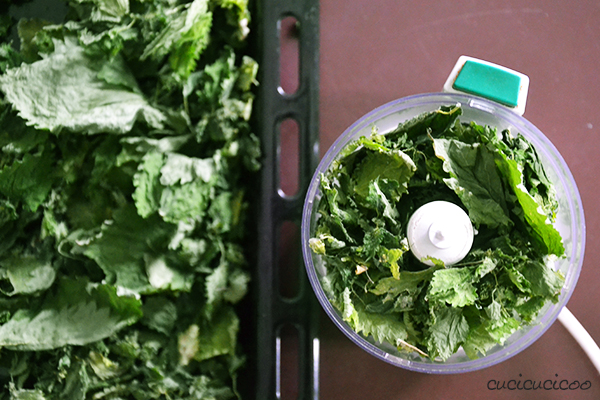
Put the dried leaves in a food processor* and chop them up as small as you can.

The stems do not easily get well-ground, as you can see in the picture above. After taking the pictures in this post, I then put the ground nettle in a coffee grinder* and that ground them into a fine powder right away. However you need to first put them in a food processor, otherwise it’ll take you forever to grind just a few whole leaves at a time in the coffee grinder.
(Incidentally, I’ve never used my coffee grinder for grinding coffee beans. I use it mostly for grinding regular granulated sugar to turn it into powdered sugar. In Italy powdered sugar costs a lot more than granulated sugar, and I haven’t bought it in years!)

This homemade nettle powder doesn’t have an extremely strong flavor, so you need to put a decent amount on, and I don’t suggest cooking it, but adding it afterwards.
What can you use it on? Anything! If you need a quick meal, try pasta tossed with extra virgin olive oil, raw garlic (or garlic powder), stinging nettle powder and parmesan.

For a more protein-based dish, sautè onions in extra virgin olive oil, crumble tofu into it, cook a little longer with some soy sauce, then add salt preserved lemon and your homemade nettle powder.
Or why not mix it with salt and dried lemon peels for a delicious flavored salt?

To store it, just put it in a jar or, my favorite, spice jars*, and keep it in a cool, dry place. If you add a cute label (mine has both the English and Italian words to avoid confusion in our bilingual home), you could give your special and flavorful stinging nettle powder away as a gift along with some other homemade flavored salts. Any food lover would be happy to receive them!
So get over your prejudices about weeds and learn to embrace them! Most people discard stinging nettle as a bothersome weed without realizing that it is actually extremely healthy, delicious, frequently organic and free! Take advantage of the good things nature has to offer!

If you love making your own tasty and healthy condiments, check out my recipe for homemade garlic salt!
*This post contains affiliate links to products useful for making homemade nettle powder.


Da non credere.
Anch’io l’ ho preparata l’ anno passato per me e come regalo di Natale per le amiche.
inoltre l’ adopero pure sulle insalate, pomodori e con al feta greca. Buono e salutare.
Dai, sul serio?! Sì, questa roba è buona su tutto! Che hanno detto le tue amiche del regalo? Io sarei contentissima da ricevere un regalo del genere! 🙂
Thanks for sharing over at the DIY Crush Craft Party. I’ve never seen nettle powder before! We’ve added this to our Pinterest board. Don’t forget to stop by next Thursday to add your tutorials to our next DIY Crush Craft Party!
I actually thought that it was something that I’d made up myself, but when I googled it while writing this post, I realized that it most certainly does exist and is much loved among health food afficionados! Who knew?! Thanks for pinning and I will definitely be back to the Party! 🙂
To me, nettles have always been a little like acorns — something I’ve gone through life vaguely knowing was edible, indeed more than edible, yet I’d never really bothered to get around to picking and eating what my friend Josh calls “electric grass.”
Ha! That’s funny! I didn’t realize that you can eat acorns… now I’m VERY intrigued!! 🙂
I was so excited but here, in Florida, USA, articles are telling me the stinging nettles which grow here are not edible. No reason why. The articles do say other varieties of nettle are edible. Hmmm… I’ll have to keep looking. I looked up what they taste like… spinach with a little bit of cucumber. Do you agree?
I’m new to Cucicucicoo and am thrilled to find you!
Really, Christina? I’d never heard that! I suppose that it is possible that there are varieties that aren’t edible, but I’d always heard of it being something that’s very healthy. And yes, I’d say that that’s a pretty good description of the taste! Definitely spinachy, but with a little something different which I’ve never quite been able to put my finger on! T
Ho letto ..NON assumere più di un cucchiaino al giorno ..e’ vero?
Ciao Wanda, onestamente, non ho mai sentito questa cosa, quindi non so se ci sono delle controindicazioni sul consumo eccessivo dell’ortica, ma so che è molto comune mangiarle in quantità cotte in zuppe, frittate ed altro, quindi mi sembra strano. Ma nel dubbio, limitarsi ad un cucchiaino non mi sembra una cosa grave!